GRAFT-ATHENA: Self-Improving Agentic Teams for Autonomous Discovery and Evolutionary Numerical Algorithms
arXiv, 2026
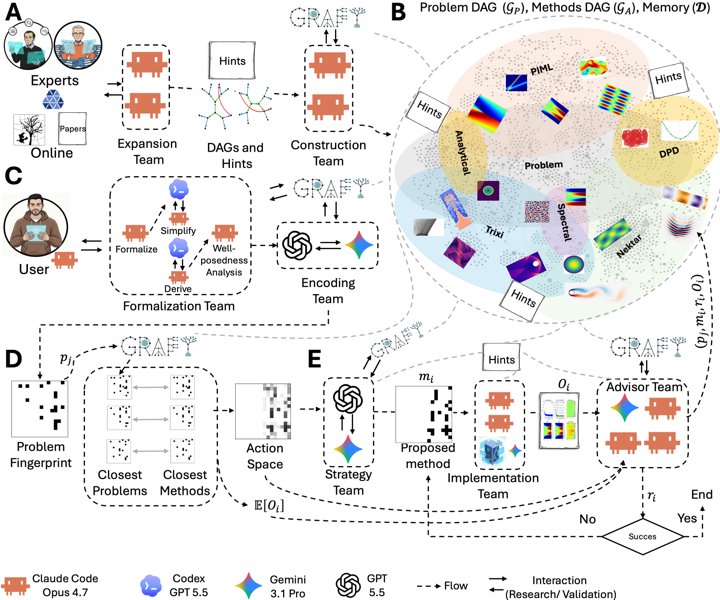
Agent teams that rewrite their own workflow between generations, improving the algorithms they discover.
PaperCode coming soon
I am a PhD candidate in Applied Mathematics at Brown University, advised by Prof. George Em Karniadakis in the Crunch Group. I work on scientific machine learning: neural network architectures and optimization methods that are reliable enough to model physical and biological systems, and agentic AI systems that design and evolve numerical algorithms on their own.
Before Brown I studied Mechanical Engineering at Universidad de las Fuerzas Armadas-ESPE in Ecuador and worked with Prof. Hongyue Sun and Prof. Luis Segura at the University at Buffalo on machine learning for advanced manufacturing. I hold an Sc.M. in Mechanical Engineering and Applied Mechanics from Brown (2026).
My research has three threads. Papers are listed under the thread they belong to.
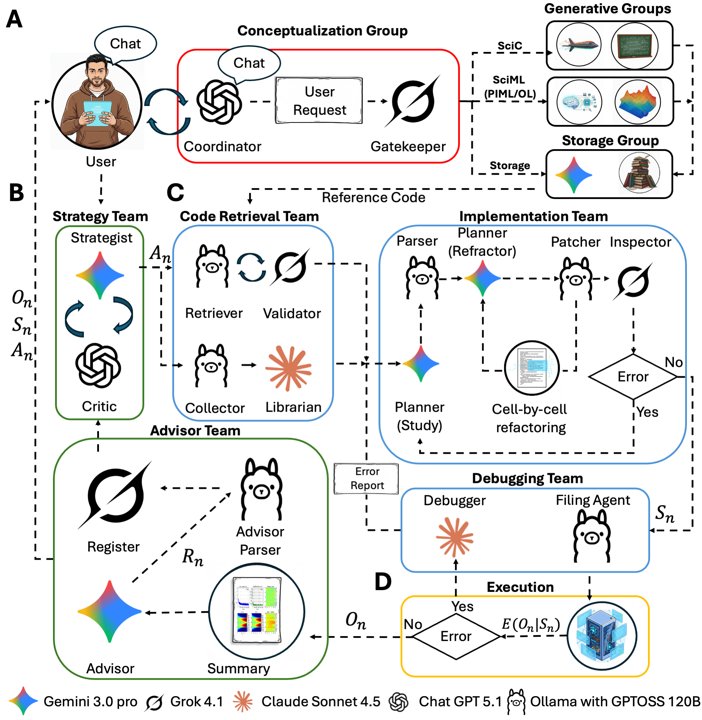
LLM-based agent teams that diagnose, design, and evolve numerical algorithms for scientific computing. The agents propose methods, run them, read the results, and improve on their own previous attempts, so that algorithm design becomes an autonomous, self-improving loop.
arXiv, 2026
Agent teams that rewrite their own workflow between generations, improving the algorithms they discover.
arXiv, 2025
A hierarchical team of LLM agents that evolves numerical solvers under a fixed compute budget.
Physics-informed methods that turn sparse, noisy measurements (particle tracks, MRI, velocity data) into full three-dimensional fields of velocity, pressure, temperature, or permeability. The main application is brain-wide cerebrospinal and glymphatic fluid flow, where direct measurement is impossible and clearance failure is linked to neurodegenerative disease. The same tools apply to turbulence and chemical reactors.
Science Advances, 2026
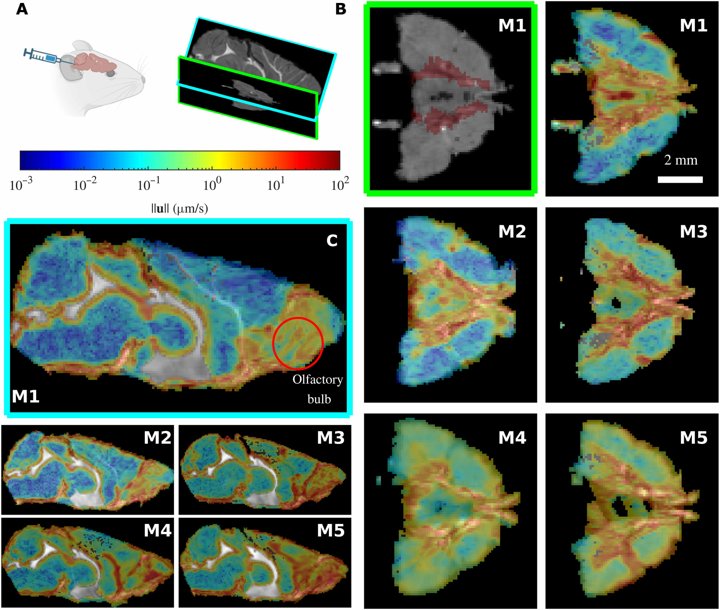
First brain-wide 3D maps of interstitial and perivascular flow, with permeability and pressure, from dynamic contrast-enhanced MRI.
TechRxiv, 2026
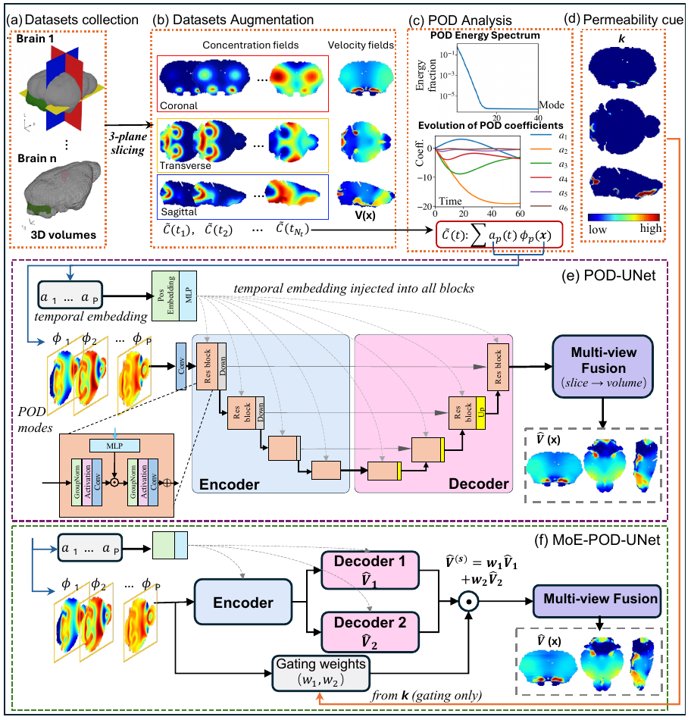
Neural operators trained on MR-AIV outputs that estimate velocity fields in seconds.
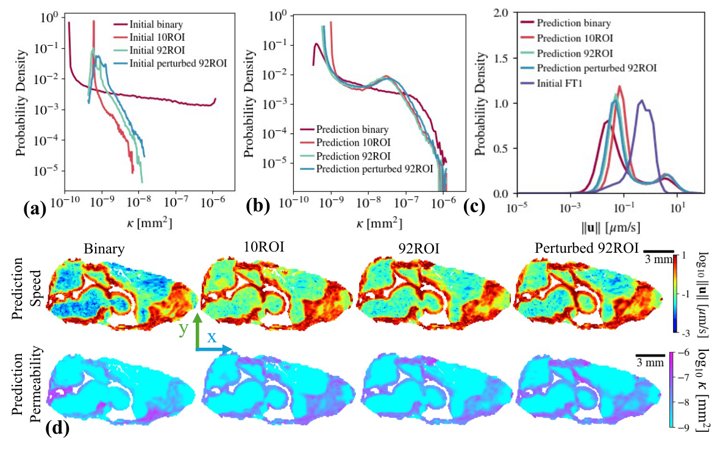
bioRxiv, 2026
How MR-AIV responds to noise, resolution, and modeling choices.
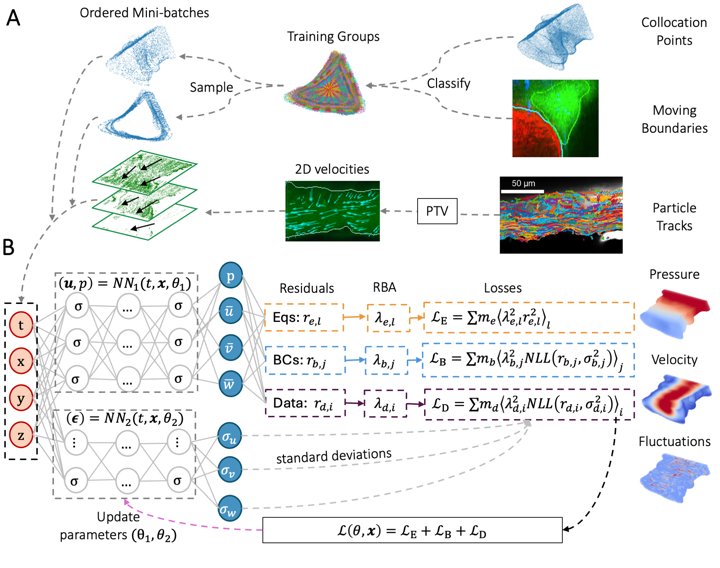
Interface Focus, 2024
AIV extended to moving vessel walls with uncertainty estimates for in vivo mouse data.
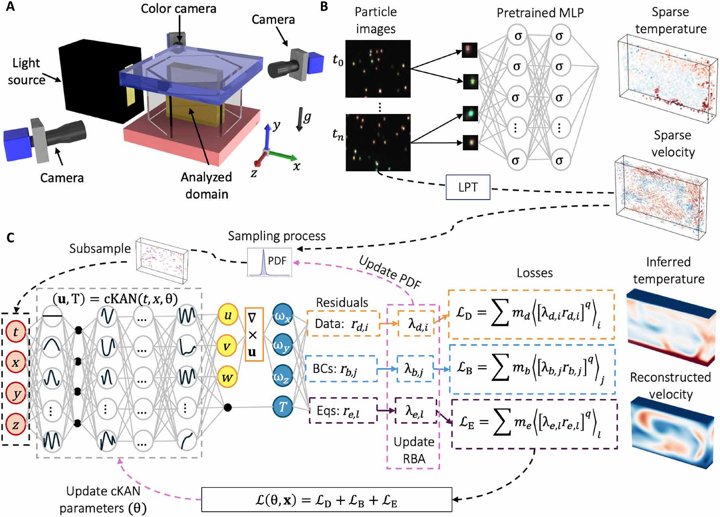
Science Advances, 2025
Full temperature and pressure fields of Rayleigh-Bénard convection recovered from velocity measurements alone.
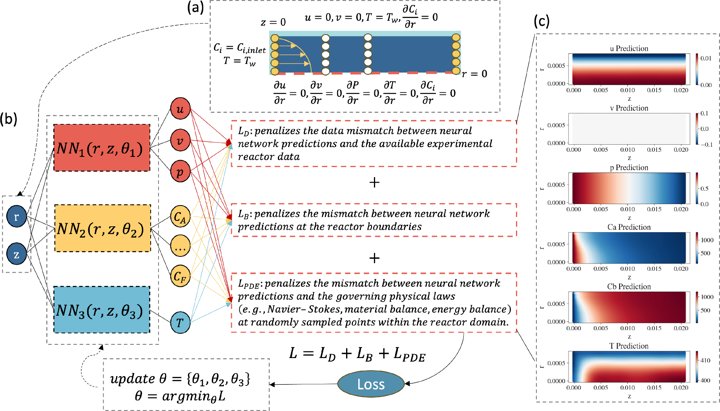
Chemical Engineering Science, 2025
Physics-informed networks that couple flow, species, and energy balances for reactor design.
The foundations the other two threads rest on: how physics-informed models should be built, how they should be trained, and why they generalize. This covers residual-based attention and its variational form, Kolmogorov-Arnold representations, and the learning dynamics of physics-informed networks.
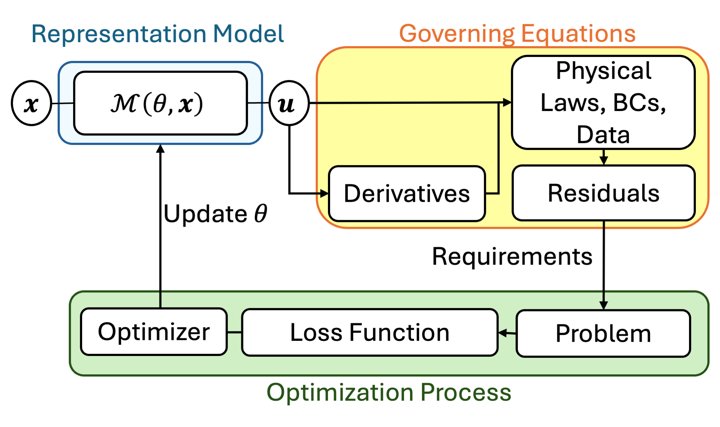
Machine Learning for Computational Science and Engineering, 2025
A review of architectures, training strategies, and theory for physics-informed learning, MLP and KAN alike.
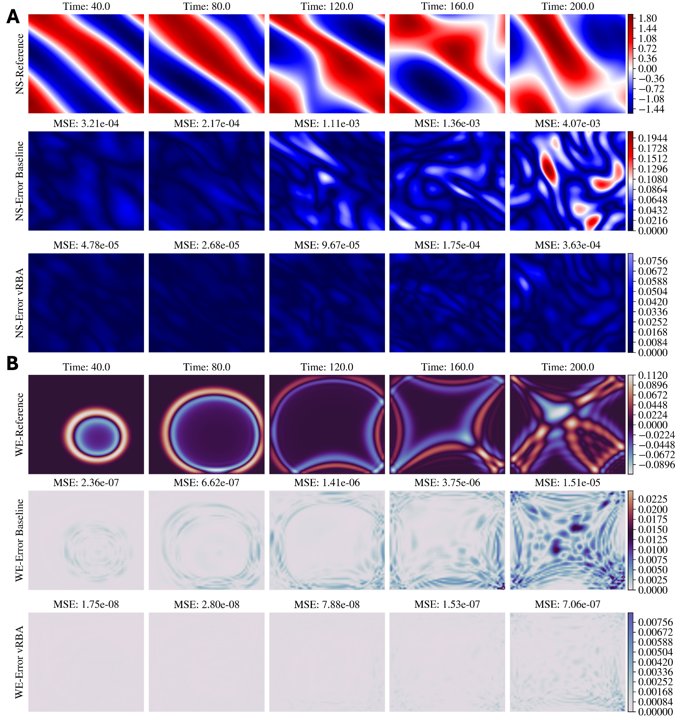
npj Artificial Intelligence, 2026
Adaptive weighting derived from a variational principle rather than heuristics, for PINNs and operator networks.
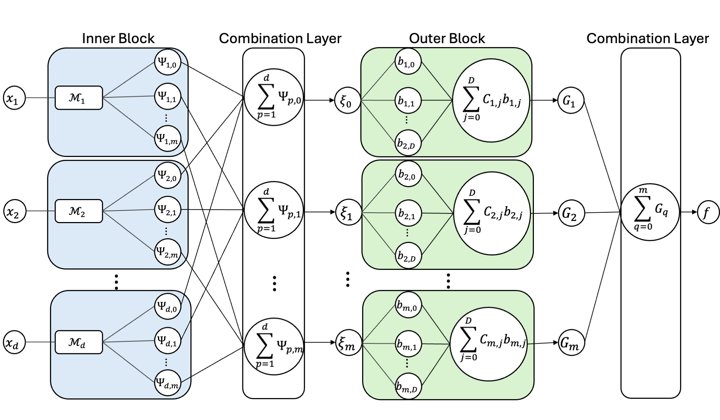
Neural Networks, 2025
A two-block architecture from Kurkova's theorem, and a study of how such networks learn.
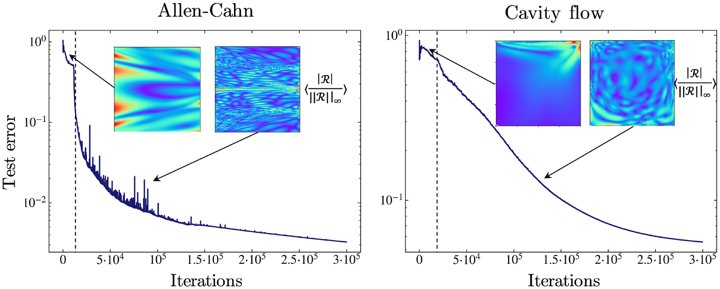
Neural Networks, 2025
Training of physics-informed networks passes through a phase transition that predicts generalization.
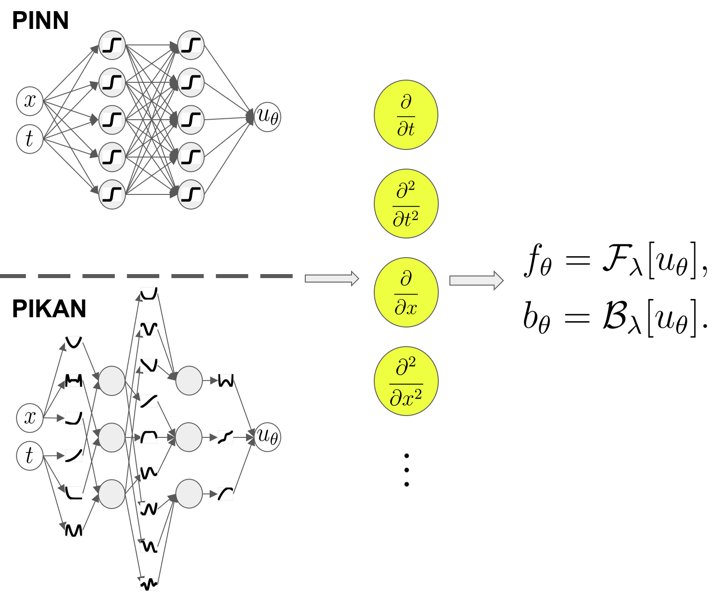
Computer Methods in Applied Mechanics and Engineering, 2024
Systematic benchmark of MLP versus KAN for PDEs and operator learning, with open code and data.
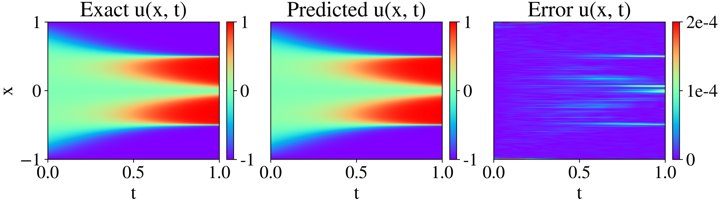
Computer Methods in Applied Mechanics and Engineering, 2024
A cheap pointwise weighting that removes the need for hand-tuned loss balancing.
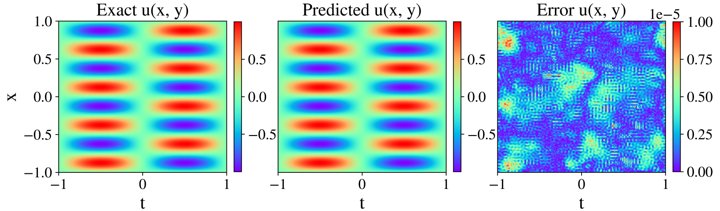
arXiv, 2023
Links residual-based attention to information bottleneck training stages.
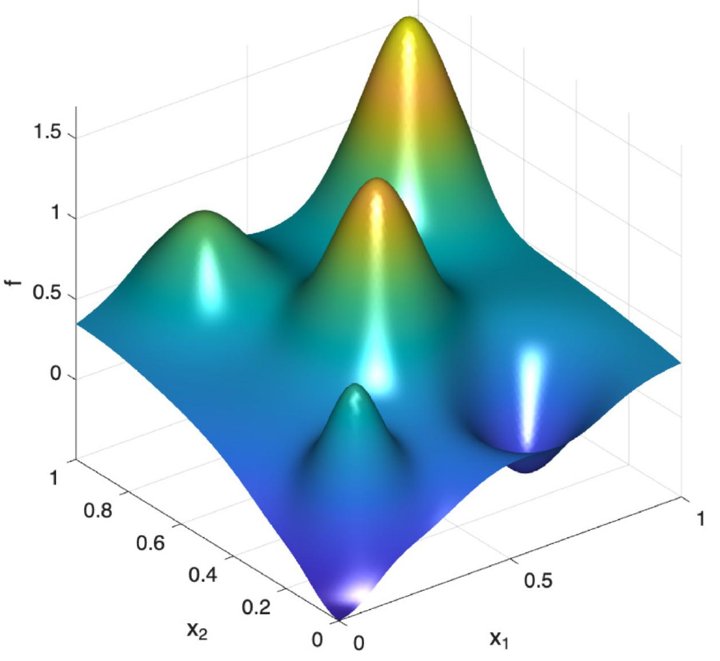
arXiv, 2025
A constructive smooth version of the Kolmogorov-Arnold representation.
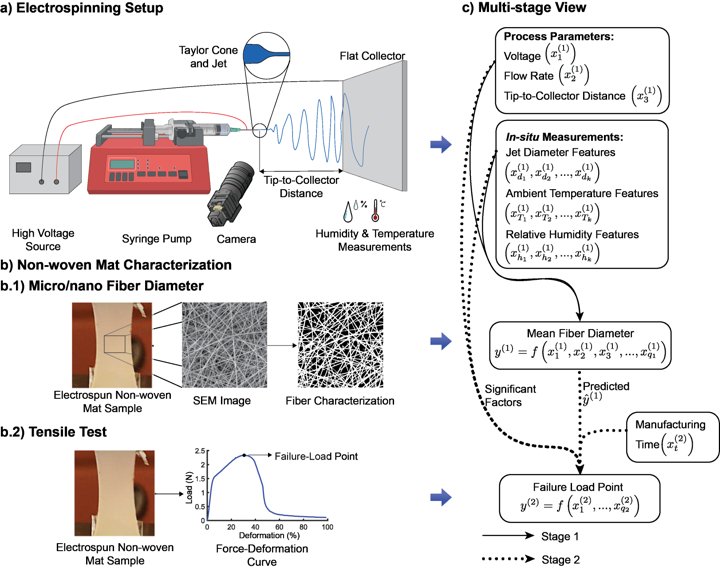
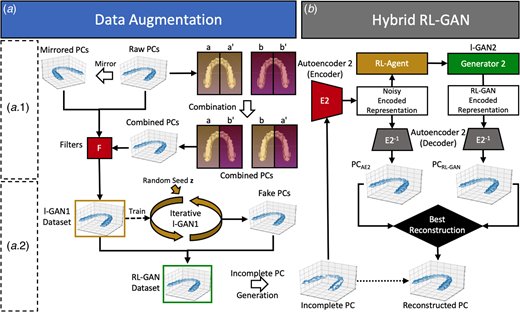
Journal of Computing and Information Science in Engineering, 2023
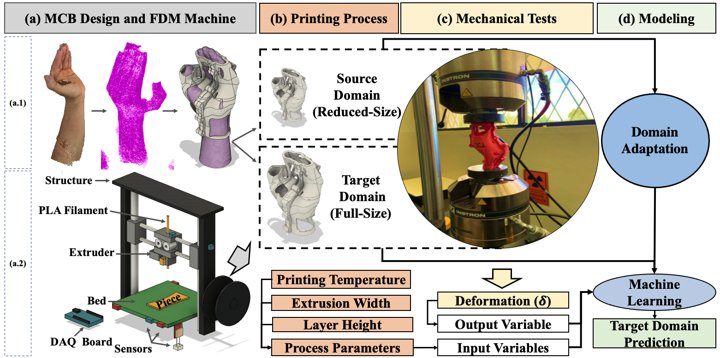
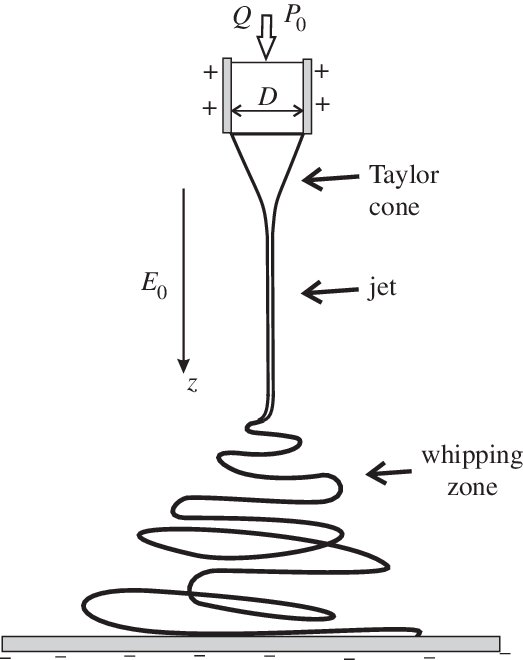
I organize the weekly Crunch Seminar at Brown University.